Glencore Expects Strong Investor Demand for Australian Listing as Electrification Boosts Copper Outlook
Glencore Targets ASX 200 Inclusion as Copper Demand Drives Interest in Australian Listing
Glencore expects strong investor demand for its Australian Securities Exchange (ASX) listing, driven by growing interest in copper and the global shift towards electrification, Chief Executive Officer Gary Nagle said ahead of the company’s market debut on 14 October 2026.
The Swiss-based mining and commodities trading group has attracted interest from prospective investors, including existing shareholders whose investment mandates restrict them from buying shares listed on overseas exchanges.
Speaking to reporters on 9 October, Nagle said the Australian listing would broaden the company’s access to local investors and potentially create new business opportunities in one of the world’s leading mining markets.
Glencore, which has a primary listing on the London Stock Exchange and a secondary listing in Johannesburg, is seeking to strengthen its presence in Australia, where it operates major coal, copper, zinc, lead and nickel assets.
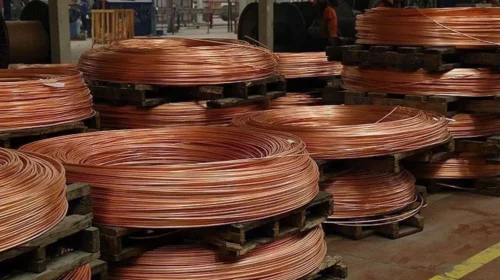
The company’s exposure to copper is a key attraction for investors seeking to benefit from electrification, electric vehicle adoption, renewable energy infrastructure and expanding electricity networks.
Analysts estimate that copper could account for approximately 50% of Glencore’s earnings by 2030, up from about 30% currently, provided its planned assets are developed on schedule.
Nagle also expects the company to qualify for inclusion in Australia’s benchmark S&P/ASX 200 index within 12 months, although some analysts believe strong investor demand could accelerate that timeline.
Beyond its mining portfolio, Glencore’s commodities trading business is another factor expected to attract Australian investors.
The business combines large-scale resource production with global metals and energy trading operations, offering investors exposure to both physical commodity production and international trading opportunities.
Glencore expects its marketing-adjusted operating profit for 2026 to exceed US$5 billion, above its previous long-term guidance range of US$2.3 billion to US$3.5 billion.
The improved outlook reflects stronger trading earnings amid geopolitical tensions and disruptions affecting global energy markets.
Despite copper’s growing importance to its long-term strategy, Glencore remains one of the world’s major thermal coal producers. Its coal exposure has limited its appeal among some institutional investors operating under environmental, social and governance investment restrictions.
However, Nagle said investor attitudes towards coal had shifted, with recent energy supply disruptions highlighting the continuing role of conventional energy sources in meeting electricity demand.
He argued that growing power consumption would require investment across multiple energy sources, while copper would remain essential for electricity transmission and distribution.
The balance between Glencore’s exposure to transition metals and its coal operations remains an important consideration for investors assessing the company’s long-term positioning.
The Australian listing follows unsuccessful discussions earlier in 2026 over a potential combination with Rio Tinto.
Although the proposed transaction did not proceed, speculation persisted that a stronger Australian market presence could improve Glencore’s strategic options.
Nagle rejected suggestions that the listing was intended to facilitate merger or acquisition activity, saying the decision was driven by investor demand and the benefits of establishing a stronger presence in Australia.
He nevertheless acknowledged that a local listing could provide additional strategic flexibility.
Glencore’s Australian debut is expected to broaden its investor base, improve share liquidity and strengthen its position in a market with deep expertise in mining and commodities.
The listing comes as copper demand is expected to benefit from electrification and expanding power infrastructure, while Glencore’s diversified production and trading operations offer investors exposure to a broad range of commodity markets.